
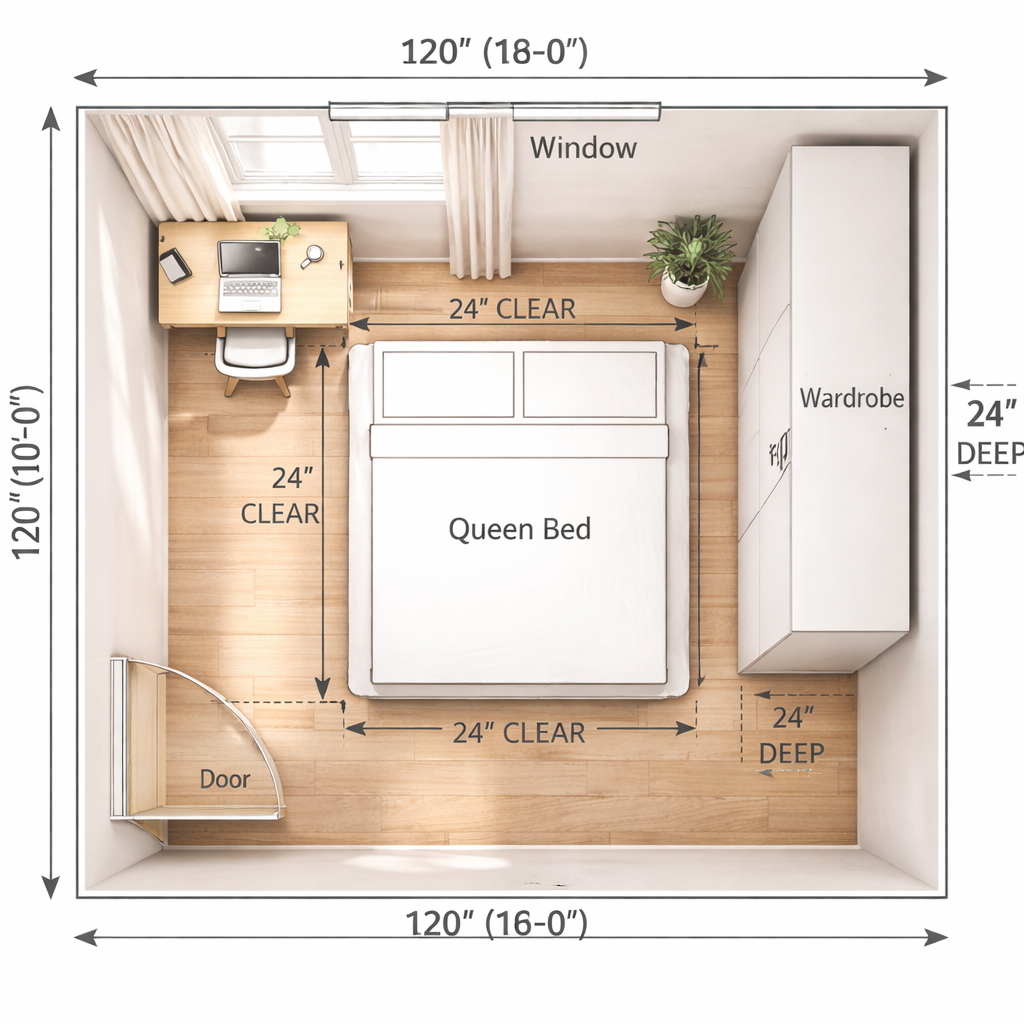
(Quick Summary)
-
A 10×10 bedroom equals 100 sq ft (120 × 120 inches).
-
A queen or double bed can fit, but space planning is important.
-
Maintain 24–30 inches walking clearance around furniture.
-
Use sliding wardrobes or vertical storage to save space.
-
Corner bed layouts help maximize open floor area.
-
A study desk can fit if furniture is arranged efficiently.
-
Smart layouts allow a small bedroom to support sleeping, storage, and work
A 10×10 bedroom layout is one of the most common bedroom sizes in modern apartments and compact homes. In many urban homes, especially in Indian cities, bedrooms are often limited to around 100 square feet.
At first glance, a room that measures 10 feet by 10 feet may feel restrictive. Many people assume a small bedroom can only fit a bed and nothing else.
Common questions people ask include:
-
Can a queen bed fit in a 10×10 bedroom?
-
Where should the wardrobe be placed?
-
How much walking space is needed around the bed?
-
Is it possible to add a study table or desk?
-
What furniture arrangement works best for a 100 sq ft bedroom?
The good news is that a well-planned 10×10 bedroom layout can still feel comfortable, organized, and practical.
Instead of randomly placing furniture or copying Pinterest inspiration blindly, the key is understanding room proportions, furniture dimensions, and clearance space. Once you plan these correctly, even a small bedroom can support sleeping, storage, and workspace functions.
In this guide, we’ll explore real measurements, furniture placement strategies, and practical layout ideas that work in Indian homes and apartments.
Many compact Indian homes use a 10×10 bedroom layout. If you want a detailed guide focused on Indian homes, you can also explore 10 by 10 Room Interior Design That Actually Works (100 Sq Ft Indian Layout Guide)
Understanding 10×10 Bedroom Dimensions
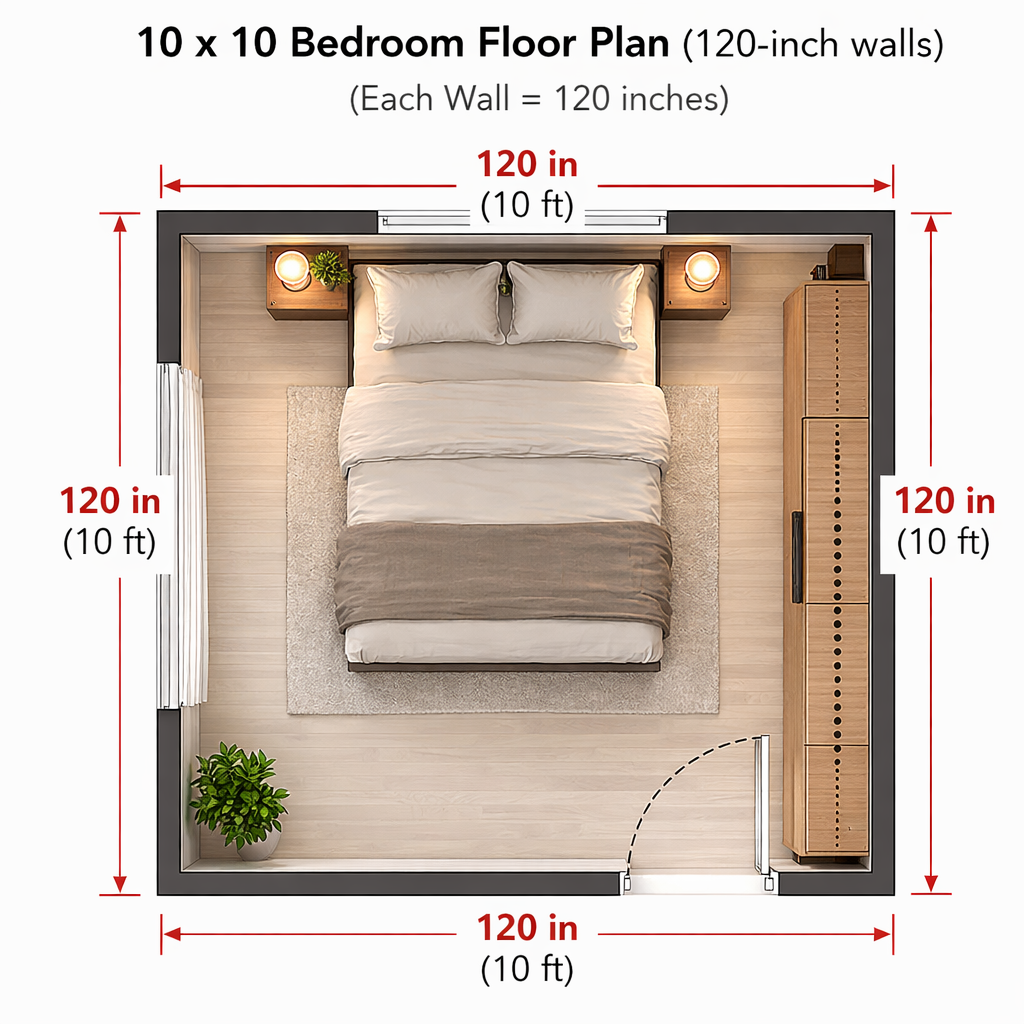
A 10×10 bedroom equals:
-
100 square feet
-
120 inches × 120 inches
However, not all of that space is usable. Once you place essential furniture like a bed or wardrobe, the remaining walking area becomes limited.
That’s why understanding furniture dimensions is important before planning the layout.
Typical Furniture Dimensions
| Furniture | Average Size |
|---|---|
| Queen Bed | 60 × 80 inches |
| Double Bed | 54 × 75 inches |
| Single Bed | 36 × 75 inches |
| Wardrobe Depth | 22–24 inches |
| Study Desk Depth | 18–24 inches |
These measurements help determine how much furniture a 100 sq ft bedroom layout can realistically support without feeling cramped
Understanding furniture dimensions and clearance space is important before planning a small bedroom layout.
Example with reference
Understanding furniture dimensions and clearance space is important before planning a small bedroom layout. Many residential design standards also emphasize minimum space planning for comfortable movement, as recommended by the American Institute of Architects in residential space planning guidelines.
source link – https://www.lifeofanarchitect.com/residential-architecture-101-specifications/
What Furniture Can Fit in a 10×10 Bedroom?
A common misconception is that a small bedroom can only fit a bed.
In reality, a well-planned 10×10 bedroom furniture layout can include:
-
Bed
-
Wardrobe
-
Study desk
-
Storage furniture
-
Small bedside table
The key is prioritizing functionality.
For example:
Sleeping-Focused Layout
Bed + wardrobe
Work-Friendly Layout
Bed + study desk + compact wardrobe
Storage-Focused Layout
Bed + wardrobe + vertical storage shelves
The correct layout depends on how the bedroom is used daily
Also Read – Bedsheet Sizes Explained: Single, Double, Queen & King
Minimum Walking Space Required in a Small Bedroom
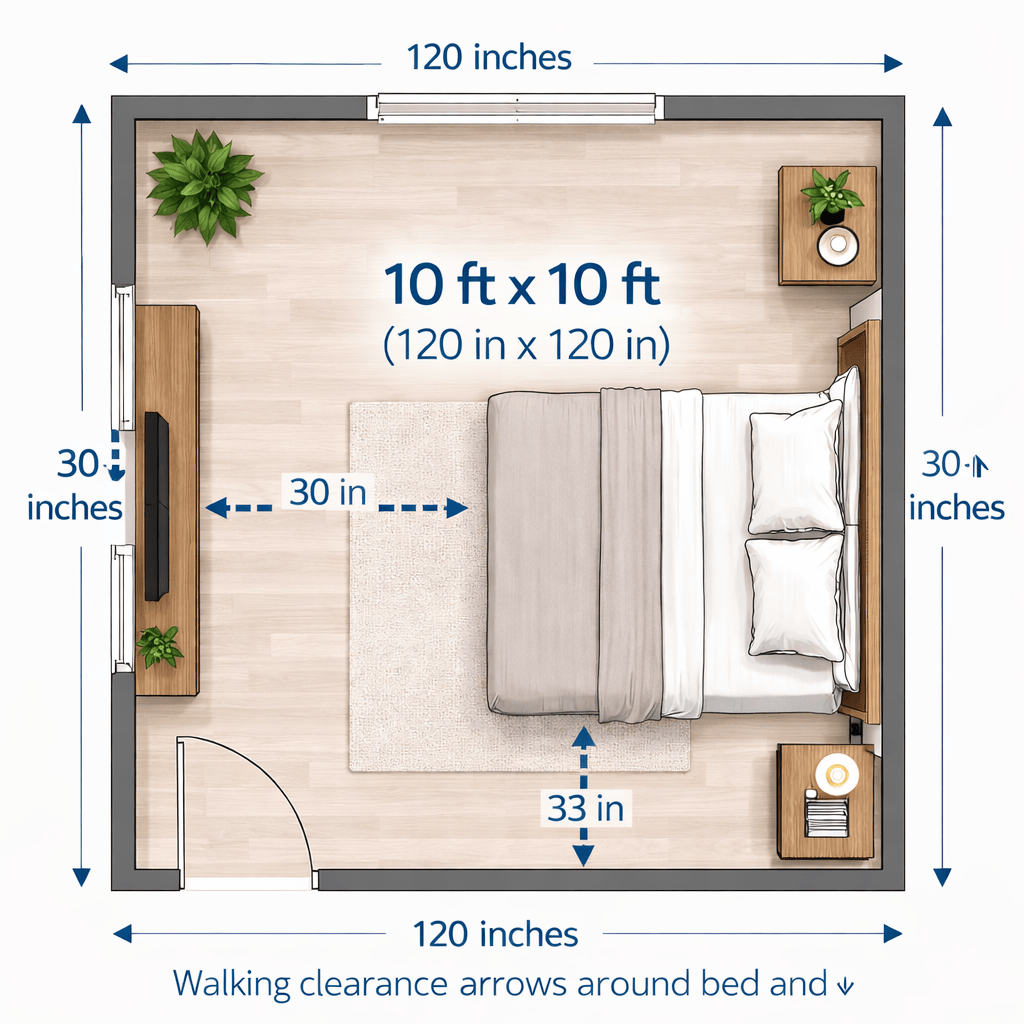
One of the biggest mistakes in small bedroom design is ignoring clearance space.
Interior designers usually recommend the following minimum walking space around furniture:
| Area | Recommended Clearance |
|---|---|
| Bedside walking space | 24–30 inches |
| Wardrobe door clearance | 30 inches |
| Desk chair movement | 30 inches |
If the clearance is smaller than this, the bedroom begins to feel cramped.
In a 10×10 bedroom layout, even a few inches of extra walking space can make the room feel noticeably larger.
10×10 Bedroom Layout Ideas (Practical Floor Plans)
Below are some practical 10×10 bedroom layout ideas that work in real homes.
Layout 1: Corner Bed Layout (Best for Maximum Space)
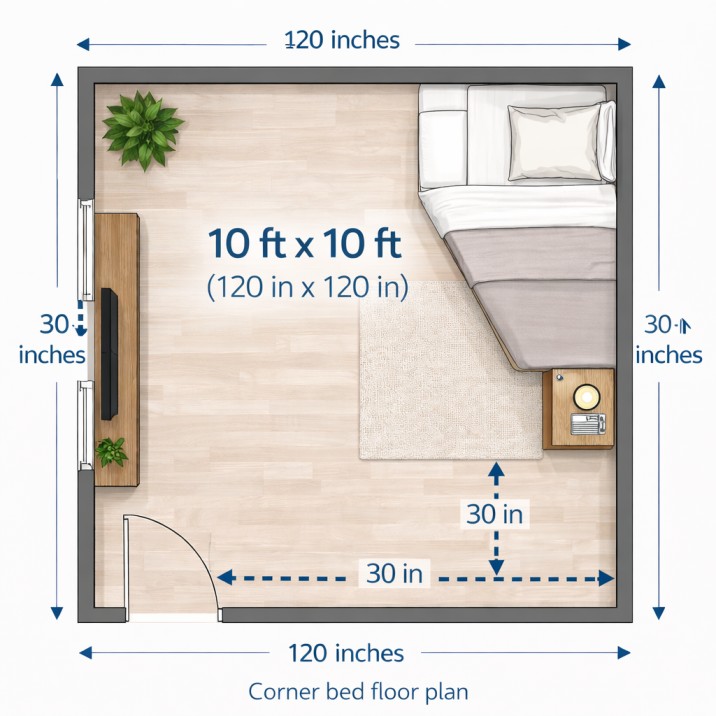
In this layout, the bed is placed against two walls.
Advantages
-
Maximum open floor space
-
Works well in small apartments
-
Creates room for wardrobe and desk
Typical Arrangement
North wall → Bed
West wall → Wardrobe
East wall → Study desk near window
This layout is particularly useful when you want to keep the center of the room open.
Layout 2: Center Bed Layout (Best for Couples)
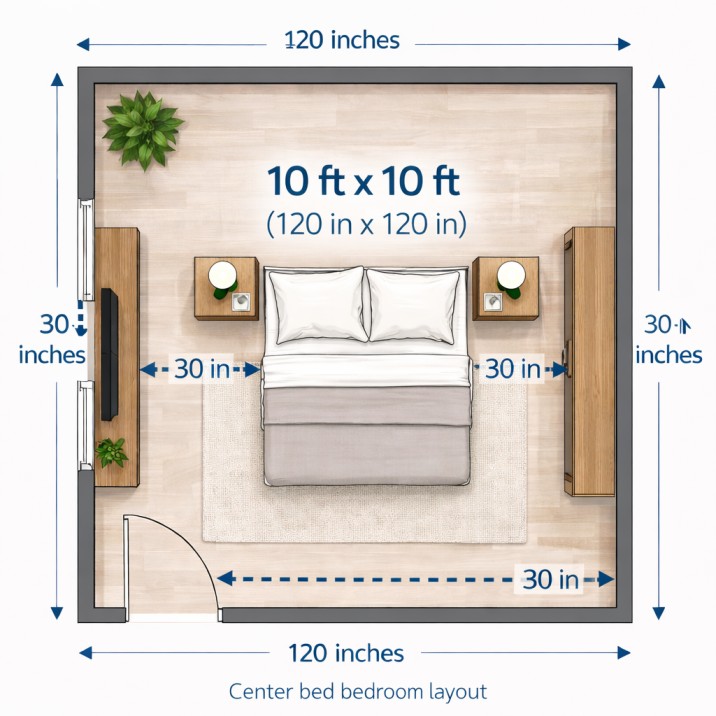
This is the most traditional bedroom arrangement.
Layout Structure
Bed centered against main wall
Wardrobe opposite the bed
Small bedside tables on both sides
Advantages
-
Balanced and symmetrical
-
Comfortable access for couples
-
Familiar bedroom design
The only drawback is slightly reduced walking space.
Layout 3: Bed + Study Table Layout
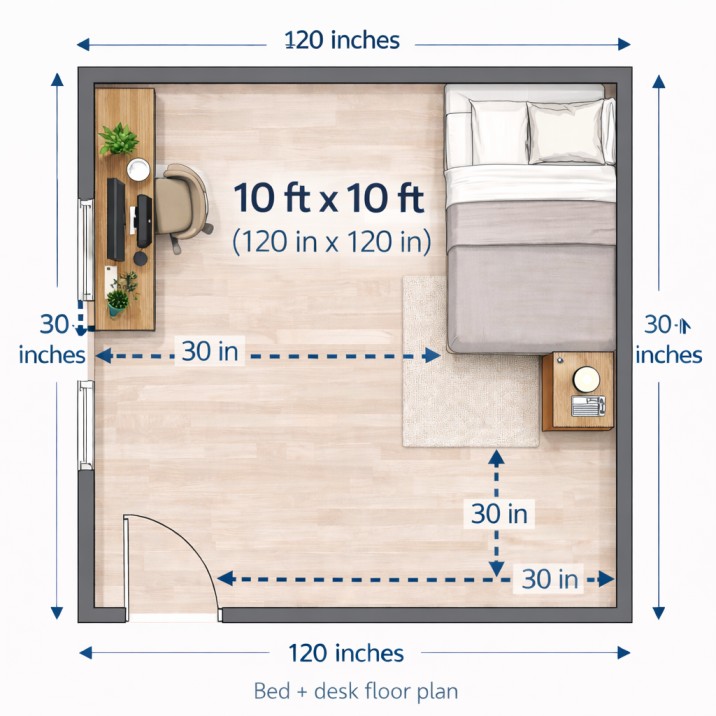
Perfect for:
-
Students
-
Work-from-home professionals
-
Small apartments
Arrangement
Bed placed along one wall
Study desk near window
Sliding wardrobe on opposite wall
A wall-mounted desk can save valuable floor space.
Layout 4: Bed + Sliding Wardrobe Layout
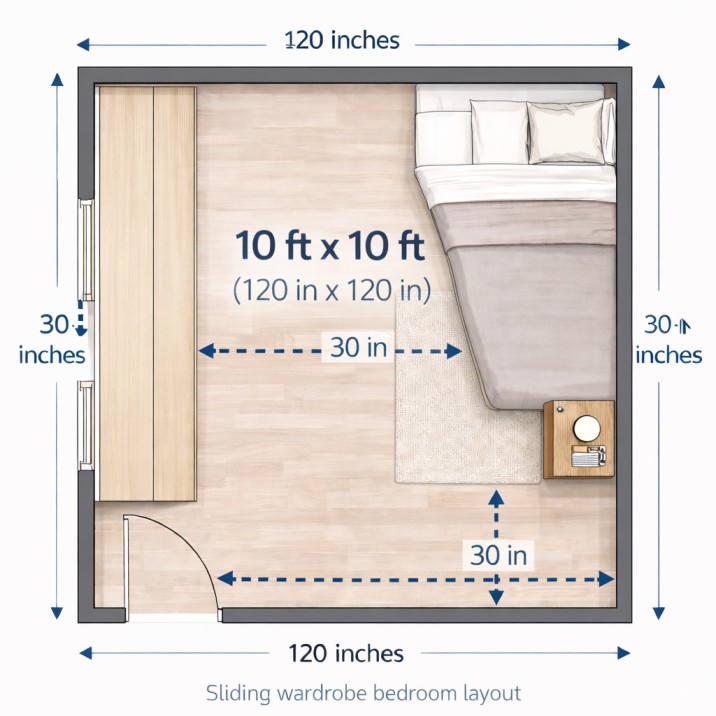
Traditional wardrobes with swing doors require extra space.
Sliding wardrobes are more efficient in small bedroom layouts.
Benefits
-
Saves door clearance space
-
Works well in narrow rooms
-
Looks modern and minimal
Layout 5: Two Single Beds Layout
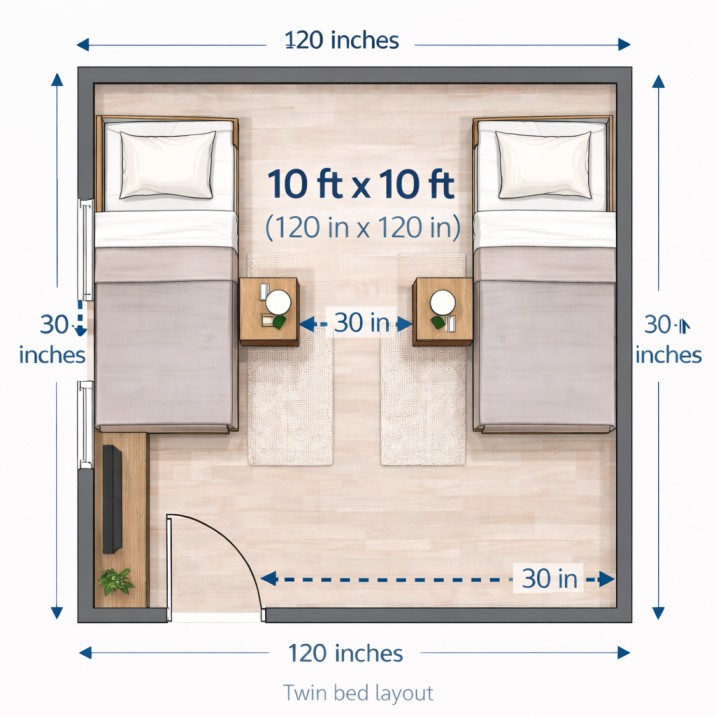
This layout works well for:
-
Kids’ bedrooms
-
Guest rooms
-
Shared rooms
Arrangement
Two single beds along opposite walls
Shared wardrobe
Central walking space
Layout 6: Murphy Bed Layout (Space-Saving Option)
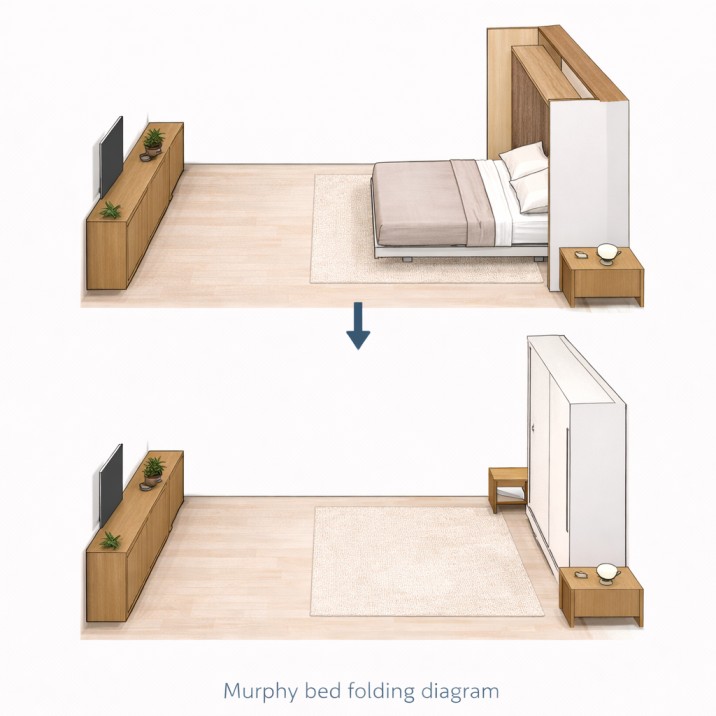
Murphy beds fold into the wall when not in use.
Advantages
-
Maximum floor space during the day
-
Ideal for studio apartments
-
Multi-purpose room usage
Disadvantages
-
Higher installation cost
-
Requires wall installation
Simple design choices like minimal furniture and light colors can make a big difference. You can also explore simple minimalist bedroom ideas for small rooms.
Wardrobe Placement in a 10×10 Bedroom
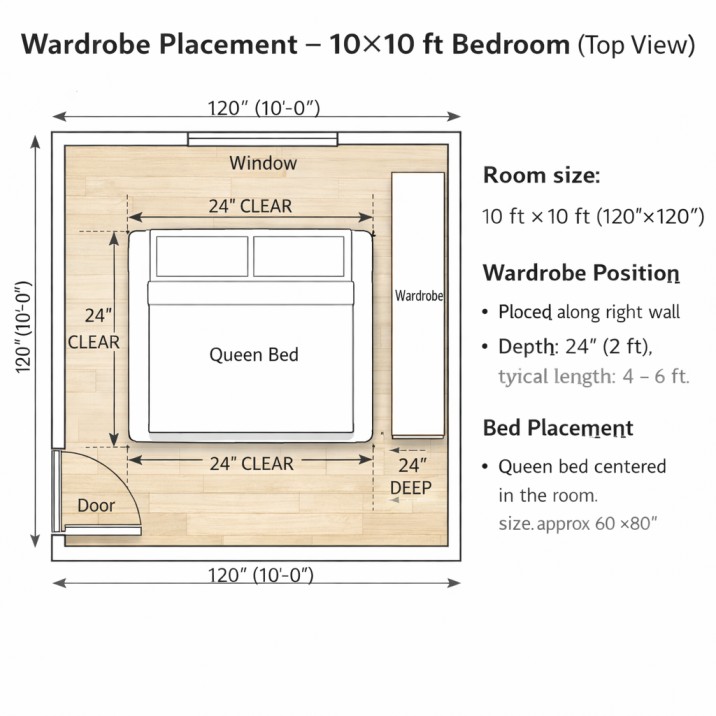
Wardrobe placement significantly affects how spacious a bedroom feels.
Recommended Wardrobe Depth
22–24 inches
Best Wardrobe Positions
-
Opposite the bed
-
Corner wardrobe placement
-
Sliding wardrobe beside bed
Avoid placing bulky wardrobes close to the entrance door.
Best Bed Size for a 10×10 Bedroom
Not all bed sizes work comfortably in small bedrooms.
| Bed Type | Size | Suitability |
|---|---|---|
| Single | 36×75 | Best for small rooms |
| Double | 54×75 | Balanced option |
| Queen | 60×80 | Fits but tight |
| King | 76×80 | Usually too large |
For most 10×10 bedroom layouts, double or queen beds are the most practical.
How to Make a 10×10 Bedroom Look Bigger
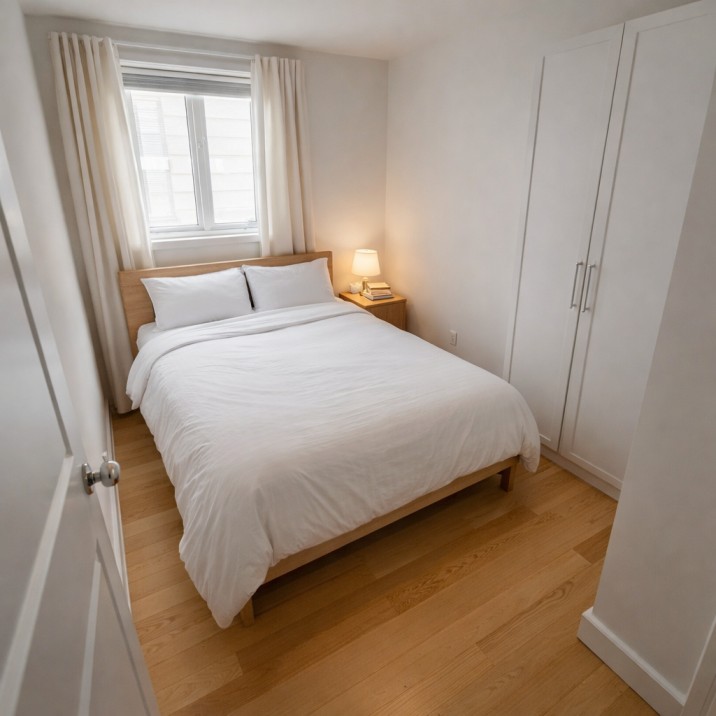
Even a small bedroom can feel spacious with the right design approach.
Practical Tips
-
Use light color palettes
-
Install floating shelves
-
Use mirrors to reflect light
-
Choose low-profile furniture
-
Use vertical storage
Lighting also plays an important role.
Wall lights or pendant lights can free up bedside table space and make the room feel less cluttered.
Smart decor and lighting can visually expand a small bedroom. Here are some small bedroom decor ideas for space saving design.
When NOT to Follow Pinterest Bedroom Trends
Pinterest and Instagram are full of beautiful bedroom designs.
However, blindly copying these trends can cause problems in small bedrooms.
Many trendy designs ignore:
-
Real room proportions
-
Furniture clearance
-
Budget limitations
-
Storage requirements
For example, oversized beds or decorative benches may look attractive in photos but can make a 100 sq ft bedroom layout feel crowded.
Intentional design is always better than trend-driven decoration.
Many Indian homes prefer practical and affordable bedroom setups. You can also explore our guide on simple bedroom design for middle class family in India for more budget-friendly ideas.
Common Mistakes When Designing a 10×10 Bedroom
Small bedrooms often feel cramped because of simple planning mistakes. Avoid these common issues when designing a 10×10 bedroom layout.
1. Choosing an Oversized Bed
A king-size bed can reduce walking space and make the room feel crowded.
2. Ignoring Walking Clearance
Always maintain at least 24–30 inches of walking space around the bed and wardrobe.
3. Adding Too Much Furniture
Too many cabinets, benches, or decor pieces can quickly fill a small room. Keep furniture minimal and functional.
4. Blocking Natural Light
Placing tall wardrobes near windows can make the bedroom darker and visually smaller.
5. Not Using Vertical Storage
In small bedrooms, wall shelves or tall storage units help save valuable floor space.
Budget Planning for a 10×10 Bedroom Setup
Bedroom design can vary depending on budget.
Low Budget Refresh
Possible improvements:
-
Repaint walls
-
Add floating shelves
-
Change lighting fixtures
-
Use storage boxes
Mid-Range Upgrade
-
Storage bed
-
New wardrobe
-
Desk setup
-
Decorative lighting
Premium Transformation
-
Custom wardrobe
-
Murphy bed
-
Built-in storage
-
Designer lighting
The best strategy is investing in functional furniture first, before decoration.
Long-Term Impact of Bedroom Design
Bedroom layout affects more than just appearance.
A well-planned bedroom improves:
-
Sleep quality
-
Mental comfort
-
Daily productivity
-
Storage organization
Poor layouts often lead to clutter and inconvenience.
That’s why thoughtful furniture placement and layout planning are essential.
Key Takeaways
A 10×10 bedroom layout should focus on efficient furniture placement and sufficient walking clearance.
Key Recommendations
-
Choose queen or double beds
-
Use sliding wardrobes
-
Maintain 24–30 inches walking space
-
Consider corner bed layouts
-
Use vertical storage
With proper planning, even a 100 square foot bedroom can feel functional and comfortable.
Expert Tips for Designing a Small 10×10 Bedroom
Professional interior designers often follow a few principles when planning compact bedrooms:
1. Prioritize circulation space
Always maintain at least 24 inches of walking space around essential furniture.
2. Use multifunctional furniture
Storage beds, wall-mounted desks, and foldable tables help maximize usable floor area.
3. Avoid bulky furniture
Oversized wardrobes or heavy bed frames can visually shrink a small bedroom.
4. Use vertical storage
Tall shelves and wall cabinets help keep the floor uncluttered.
These design principles are commonly used in small apartment bedrooms and studio layouts, where efficient space planning is essential.
Frequently Asked Questions
Can a queen bed fit in a 10×10 bedroom?
Yes, but walking space may be limited. Proper furniture placement is essential.
Is a 10×10 bedroom too small?
Not necessarily. Many modern apartments use this size.
What wardrobe size works best in a small bedroom?
Wardrobes with a depth of 22–24 inches are ideal.
How much walking space should a bedroom have?
At least 24–30 inches around the bed and wardrobe.
Can two beds fit in a 10×10 room?
Yes, two single beds can fit when placed along opposite walls.
Conclusion
Designing a 10×10 bedroom layout requires thoughtful planning rather than blindly following trends.
Understanding room dimensions, furniture sizes, and clearance space allows you to create a bedroom that feels comfortable and organized.
Even a small 100 sq ft bedroom can support sleeping, storage, and workspace when furniture placement follows practical design principles.
With the right layout strategy, a compact bedroom can become both functional and visually balanced.
Also Read our super details practical Guide – 10×10 Bedroom Layout: 12 Smart Floor Plans for a 100 Sq Ft Room